Fairview Historical Society Articles Archives
The Halifax Catastrophe and The Chebucto Road School
Home – Articles – Videos – eBooks & PDFs – Local Authors – Sponsors – Contact
Submitted By: Devonna Edwards
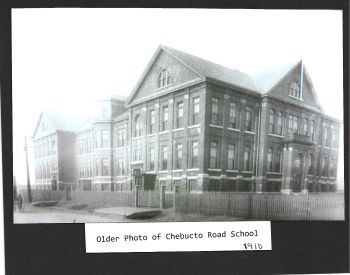
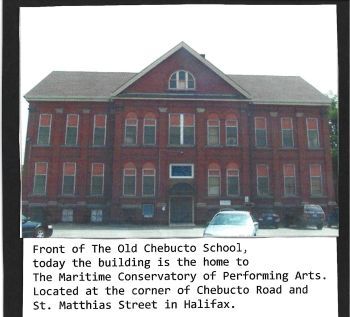
Chebucto Road School
The Chebucto School building was constructed in 1910 and still remains standing today. It is located at the corner of Chebucto Road and St. Matthias Street in the North End of Halifax. The property on which the school was built was bought in 1908 by the Halifax Board of School Commissioners and was located between Chebucto Road and North Street. The school was needed to replace the Compton Avenue School which had burnt down in 1906, so the Board of School Commissioners decided to rebuild. The land they bought was formerly owned by Mrs. Withan and Mr. Stevens and was sometimes used as a circus ground.
The property was so large that the Commissioners decided to build Oxford Street School as well. The two storey brick Chebucto School building is escribed as a Classic Revival style. It was designed by Walter Busch, in formal classical I-shaped configuration with pavilion and was about 157 feet long by 90 feet at the widest part. The school building cost $92,000 and the contractors were S.A. Marshall & Sons of Halifax. The washrooms and playrooms for both boys and girls were located in the basement. There were eight classrooms on the main floor and on the second floor there were six classrooms, auditorium, library and museum. In 1910 schools often had museums or exhibits that showcased artifacts and historical items related to their local history. These museums allowed students and visitors to learn about the school’s history and the community’s past.
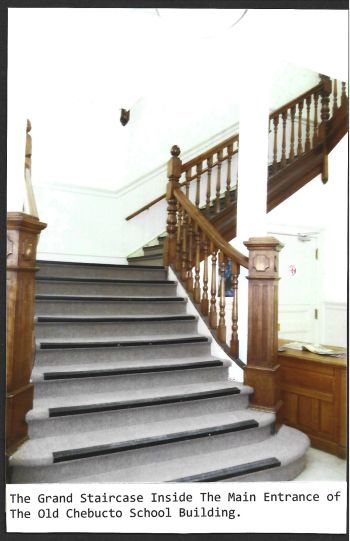
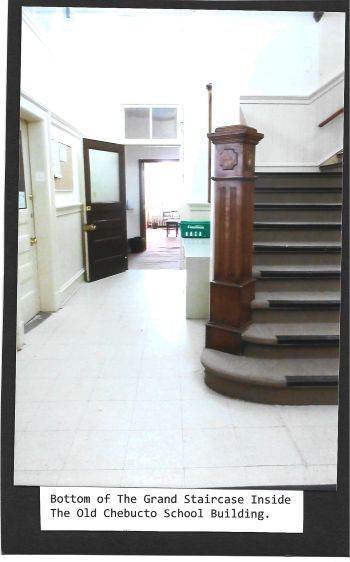
When Chebucto School was constructed it was the largest and finest school in Halifax. At the time it first opened, the school had room for seven hundred students, but during the First World War due to an increase in population the amount of students coming to the school swelled to overflow. During that time even the large auditorium was filled with desks, chairs and screens to accommodate extra classes for junior grades.
The Halifax Catastrophe (Explosion) and The Role Chebucto Road School Played in The Aftermath
On the day of the Halifax Explosion December 6, 1917 the students attendance was down to one class that morning due to a heating issue. The coal used for fuel was in short supply due to the War, so the School Board told the janitors to save their fuel at night, which made the classrooms very cold in the early morning. It was decided that only the older grade nine students would attend the regular 9 o’clock class and the younger students would start their class at 10 o’clock when the temperature in the school was more comfortable. That decision saved the lives of many students attending the school,
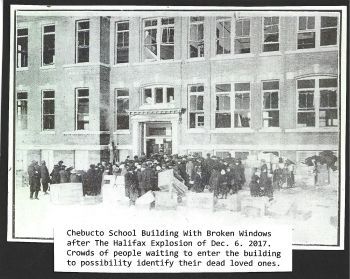
because on that day every window and door was blown out. The grade nine classroom as luck would have it was located on the south side and since the blast came from the north no deaths occurred there, but students were injured with flying glass from the broken windows.
The large school building was relatively undamaged, the military cleaned up the debris and the windows and doors were covered up as best as they could, to block the freezing snow and wind from blowing in. It was then used as a Triage and First Aid Centre, Morgue and Funeral Home. The officials decided to use the school’s basement as a make shift morgue, because the area could contain a thousand bodies or more. Soldiers soon arrived to ready the basement which was not an easy task as the basement was in total darkness and the soldiers only had a few lanterns. Not long after, the first wagon containing the deceased pulled up to the school. The wagon was overed by a tarpaulin which was thrown aside, as the soldiers collected each body and carried them
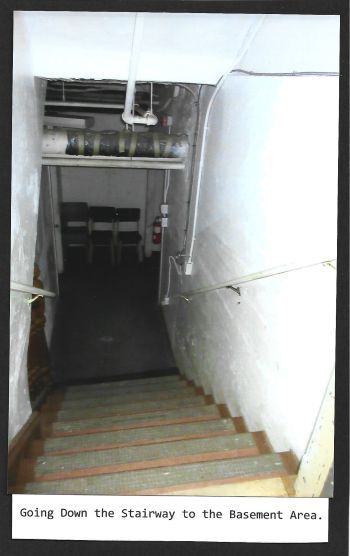
down the basement stairs. There they arranged them in a row on the concrete floor. That process was to be repeated many times as the parade of wagons continued over a period of days. Once there the soldiers covered each with a white sheet and those with black soot on their faces had to be washed in order for family members to identify them. Later charred human remains arrived in verist containers and the morticians looked through them to find anything that might identify the owner such as rings, watches, etc. When the soldiers had the corpses ready for viewing, family members came by the hundreds to hopefully find their loved ones.
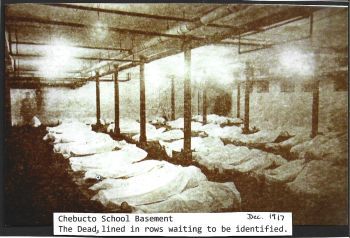
Armand Schreiter a Kitchener Mortician, on hearing of the Explosion volunteered to help care for the bodies of the numerous deceased. When he arrived at the Chebucto School basement there were already 300 bodies lined up and everything was in quite a disorganized state, although the soldiers were doing
their best, they were not Morticians. He brought order to a terrible situation as the dead were arriving in massive numbers. Under his direction the soldiers washed, tagged and identified the bodies and then released them for burial. Afterwards Armand refused payment for his services and he also refused payment for his transportation and his hotel expenses. An honourable young man, who should never be forgotten for his service in Halifax’s time of need!
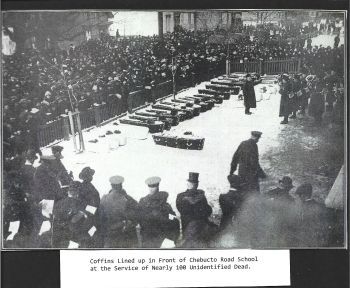
Most of the twelve hundred bodies found were identified at the school and taken away by family or friends, but many could not be identified or had no living family left to collect them. The remaining unclaimed were placed in coffins and placed outside in front of the school where a mass funeral service was held. Afterwards they were buried in a single grave in Mount Olivet Cemetery, with most of them buried at Fairview Lawn Cemetery. Other unidentified remains later discovered were buried at Bayers Road, in what is known today as The West End Cemetery.
The Chebucto Road School building was damaged and it took many weeks before it was restored, during that time the students went to class at the Halifax Academy for half a day until the building was renewed with new windows, doors and made ready for the students.
The School Building Today
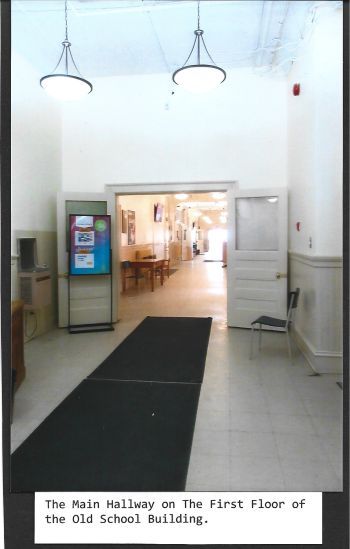
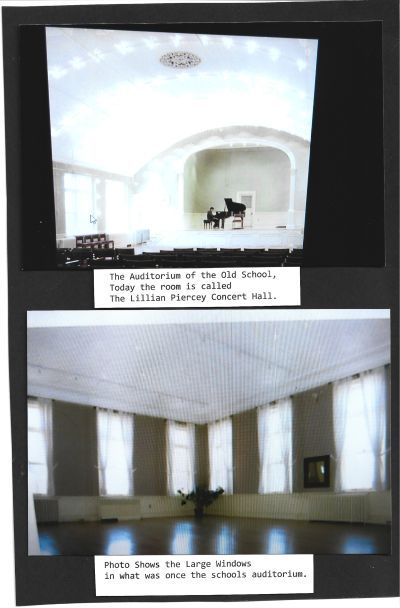
The school closed in 1975 and today is the home of The Maritime Conservatory of Performing Arts since 1997. Inside the beautiful old building there are still remanence of the former school, a lovely grand staircase can be seen to the left on entering the main door. Brightly and cheerfully painted, the halls and former classroom are spacious with tall windows, making this atmosphere hard to visualize the terror on that day. The former auditorium is now called The Lillian Piercey Concert Hall, part of the Maritime Conservatory of Performing Arts.
She was a former student of The Conservatory of Music, graduating in 1931 and later donated to her beloved school. Her husband Reginald Piercey was born and raised on Dutch Village Road in Fairview. The Concert Hall is a stunning large room with many windows, brightly lit with many lights especially on the ceiling, which appear to resemble little twinkling stars. The audio system is of a high quality and the stage probably is the same in size, as it was when it was a school.
The Basement
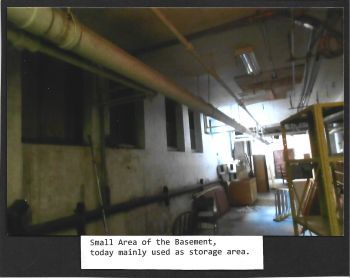
In February of 2026, I had an opportunity to visit the building and while there I asked to see the basement. A young man working there offered to show me it. Upon entering a door in the back, we descended down a gloomy stairwell. It was very creepy and upon reaching the bottom of the stairs, I was able to peek into the part of the basement which is now used as a storage area. The windows appeared to look the same as in a former photo of the morgue and I could picture in my mind the scene from that terrible time. We lingered for only a few minutes, but that was enough for me. I was taking to one lady that day and she said that as a student there years ago, she and other students were afraid to go to the washrooms in the basement, because the basement was haunted. Footsteps, doors closing, unusual sounds and strange experiences happened through-out the entire old building.
I certainly would not like to be there after dark, I am sure many restless spirits still roam about!