Fairview Historical Society Articles Archives
Home – Articles – Videos – eBooks & PDFs – Local Authors – Sponsors – Contact
Canadian Military Nurses in World War 1
Known as Nursing Sisters and fondly called “Bluebirds”
Submitted By: Devonna Edwards
They were affectionately known as “Bluebirds” due to their distinctive blue uniforms and white veils. The Bluebirds played a crucial role in the Canadian Army Medical Corps (CAMC) during World War 1. They served in various capacities from hospitals to field dressing stations. Their dedication and bravery was evident as they cared for wounded soldiers, convalescents and even civilians. The Nursing Sister’s service in Halifax was part of a broader effort to provide medical support to Canadian troops, both at home and abroad. Training of the “Bluebirds” took place in Halifax, notably by Georgina Pope, who was the first matron of the Canadian Army Medical Corps.
They tirelessly aided the wounded all hours of the day; as patients arrived by trucks, convoys or hospital trains, the nurses were among the first to meet wounded soldiers, administering pain medication, tetanus vaccines, cleaning wounds and offering comfort, as well as clean clothing and beds to rest. The “Bluebirds” not only cared for soldiers with war injuries, but also cared for soldiers who had dysentery, trench fever, pneumonia and the influenza pandemic during that time. During “The Great War” World War 1, the Bluebirds not only supported the military in Canada, but 2,500 served overseas in France, England, Belgium, Russia and the Mediterranean (Gallipoli, Salonika) earning the reputation as both courageous and compassionate. By the end of that war 3,141 had served in the Royal Canadian Army Medical Corps (RCAMC).
Their jobs were to help and clear soldiers arriving directly from the front which made them in close proximity to active battle sites, where they faced incredible danger. They were highly respected for their skilled work and heroism.
At least 58 Nursing Sisters gave the ultimate sacrifice, as they lost their lives in the line of service in World War 1, twenty-one from direct enemy fire, and 37 due to disease or drowning.
The hospital ship, “Llandovery Castle” carried 644 wounded men from England to Halifax safely and three day later the ship Left Halifax to return to England. There were 258 people aboard, including 97 members of the Canadian Army Medical Corps and 14 Nursing Sisters, two of them from Halifax. Near midnight on June 27, 1918 a German U-Boat torpedoed and sank the Canadian hospital ship,
some 70 miles southwest of the Irish coast. There were only 24 survivors, a total of 234 people died, including all of the 14 Nursing Sisters.
Another three Nursing Sisters were killed in the 1st. Canadian General Hospital in France, when the Germans bombed the hospital in June 1918.
The Nursing Sisters served from 1914 into the early 1920s. A total of 13 Nursing Sisters from Nova Scotia were killed in World War 1.
After World War 1 the military downsized to twelve permanent Nursing Sisters and this number remained the same throughout the 1920s and the 1930s, until the beginning of World War 2, when Canadian trained nurses rose to the challenge again.
When World War 1 ended, the Nursing Sisters returned from overseas and went to work in rehabilitation hospitals, to continue caring for the thousands of soldiers, many who would need care for the rest of their lives. Other nurses took courses to become Public Health Nurses and some married and left nursing.
At Westmount Park in Halifax there used to be a plaque near the Tennis Courts dedicated to the Nursing Sisters, also known as “Bluebirds”.
The plaque gave a description of who the “Bluebirds” were, along with photos of them in uniform. Sadly today, the plaque is no longer there to remind or teach the public of their great sacrifice.
Annie Olive Piercey
A “Bluebird” from Fairview- Annie Olive Piercey. Annie grew up in The Dutch Village, later known as Fairview with her father Charles and mother Eleanor, along with six siblings: William (Will) Drysdale, Charles J., Ellie (Ella) Jane, Ida (May), Bessie and John George. Annie was born on March 7, 1884 and in later years she trained as a nurse, graduating in 1915 from the Victoria General Hospital School of Nursing. She worked at the Rockhead Infectious Disease Hospital in the north end of Halifax, until she enlisted on May 5, 1917 at the age of 33 years old.
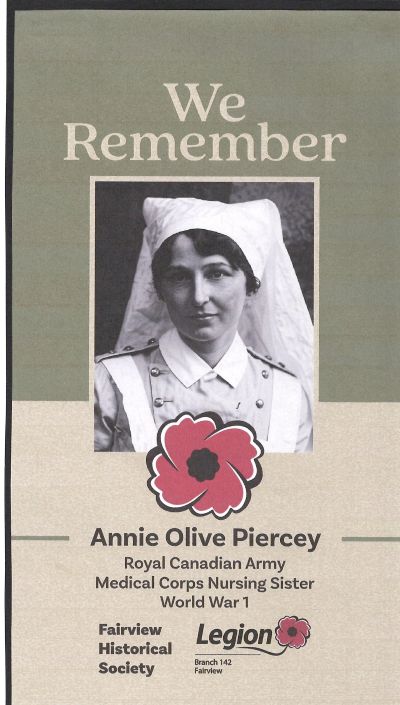
Photo of Nursing Sister Annie Olive Piercey in her “Bluebird” uniform Photo of General Information regarding Annie
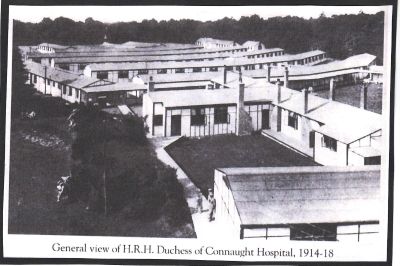
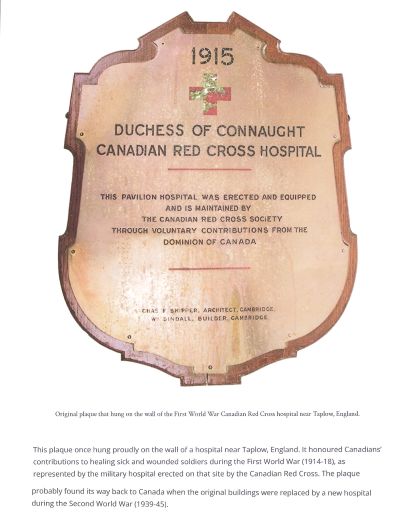
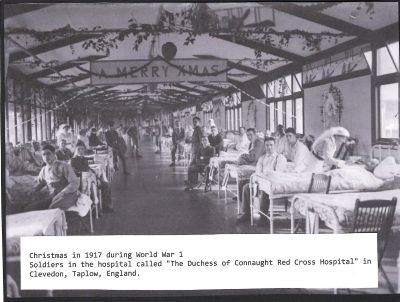
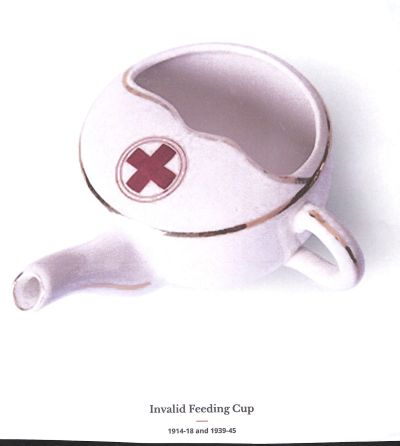
In World War 1, she joined “The Canadian Army Medical Corps” (CAMC) and became a Nursing Sister (CAMCNS) fondly known as a “Bluebird” and was listed as a Private. She was shipped out to “The Duchess of Connaught Canadian Red Cross Hospital” in Taplow, Buckinghamshire, England. She stayed at the Taplow Lodge where the Nursing Sisters quarters were located. In Taplow, the Nursing Sisters treated over 24,000 soldiers during World War 1, in The Canadian Red Cross Hospital. During World War 2, a second larger military hospital was built on the site and this hospital was called “The Canadian Red Cross Memorial Hospital”. After the Second World War the hospital was used as a Civilian Hospital, until 1985 and remained empty until it was demolished in 2006.

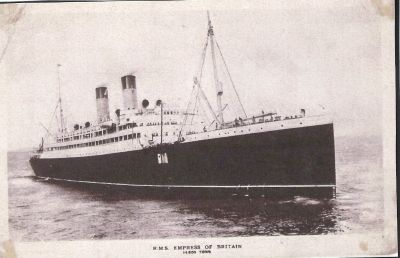
After the war Annie was discharged and sailed for Canada in July, 1918 on the “RMS Empress of Britain”. The “Empress of Britain” was a Canadian Ocean Liner that served as a armed Merchant Cruiser and also as a Troop Ship in World War 1. The ship regularly traversed the Transatlantic, crossing between Canada and Europe until 1923. The ship was the first of three CP Ships to be named “Empress of Britain”.
When Annie returned home, she nursed at the Victoria General Hospital, then at Dr. Mader’s Private Maternity Hospital (house still there) on Coburg Road in Halifax. Annie continued nursing until 1934, when she retired and went to Middle Musquodoboit to live. Annie died in 1959.